





Nigeria’s public infrastructure projects are often presented as symbols of national progress, economic transformation, and political ambition. Yet, when projects involve trillions of naira in public commitments, complex financing arrangements, and powerful private interests, the public deserves more than promises of development. It deserves verifiable records, transparent procurement, defensible costs, and clear evidence that public […]
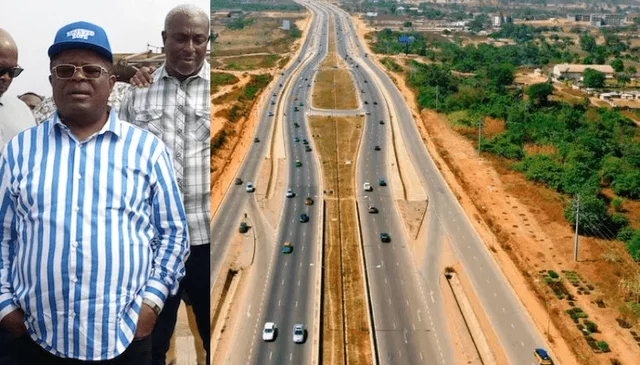
Nigeria’s public infrastructure projects are often presented as symbols of national progress, economic transformation, and political ambition. Yet, when projects involve trillions of naira in public commitments, complex financing arrangements, and powerful private interests, the public deserves more than promises of development. It deserves verifiable records, transparent procurement, defensible costs, and clear evidence that public money is being spent in the public interest. The Lagos–Calabar Coastal Highway, one of the flagship infrastructure projects of the Tinubu administration, is intended to connect Lagos with Cross River State through Nigeria’s southern coastal corridor, potentially improving transportation, trade, tourism, and access to ports and industrial centres. However, its reported cost, procurement process, financing structure, environmental implications, route alignment, and relationships with private interests raise questions that warrant rigorous investigation without presuming that wrongdoing has already been established.
The highway has been described in public accounts as approximately 700 to 750 kilometres long, with some estimates placing the overall project cost at about ₦15.6 trillion. A particularly important issue concerns Phase I, Section I, covering 47.474 kilometres from Ahmadu Bello Way to the Eleko Village area of the Lekki Peninsula. The section was awarded to Hitech Construction Company Nigeria Limited for ₦1,067,887,381,148.61. According to Works Minister David Umahi, the Federal Executive Council approved the Engineering, Procurement, Construction, and Financing (EPC+F) procurement route on 30 October 2023 and approved the Section I contract on 26 February 2024. These figures establish the scale of the initial contract, but the relationship between its price, the wider project estimate, and the scope of the approved works requires further documentary clarification.
The cost figures are particularly significant because publicly reported per-kilometre estimates differ sharply from the arithmetic derived from the contract sum. During proceedings on 9 May 2024, the House of Representatives discussed a reported construction rate of approximately ₦4.329 billion per kilometre, while News Central TV reported Umahi as saying that the cost would be about ₦4 billion per kilometre. Yet dividing the ₦1.067 trillion contract sum by 47.474 kilometres produces approximately ₦22.5 billion per kilometre. Similarly, dividing a reported overall estimate of ₦15.6 trillion by 750 kilometres gives approximately ₦20.8 billion per kilometre. These calculations do not, by themselves, prove overpricing, because the figures may reflect different scopes, cost components, or stages of project development. Nevertheless, the substantial differences demand an explanation supported by the contract, engineering specifications, and approved cost schedules.
A review of Section 2.5 of the Supplementary Environmental and Social Impact Assessment Final Report for Section 1, Version 04, dated April 2025, has identified two cost figures that require public clarification.
The report, prepared by Natural Eco Capital for the Federal Ministry of Works and published on Hitech Construction Company’s website, states an estimated cost of ₦1,067,887,381,148.61, inclusive of value-added tax, for Section 1 of the Lagos–Calabar Coastal Highway. The report describes the project as a reinforced-concrete roadway with a 59.7-metre carriageway, ten lanes, shoulders, rail infrastructure, service ducts, streetlights, drainage, and shore-protection works.
The same section of the report also contains an estimate of approximately ₦189.88 billion for the approximately 47.47-kilometre Section 1. That figure equates to about ₦4 billion per kilometre.
The two figures differ substantially. The report does not, on the information publicly available, explain the basis for the difference. It may reflect a drafting error, a different scope of work, a different cost basis, an earlier estimate, or another project component. No such explanation has been publicly confirmed.
The ESIA is a consultant’s environmental and social assessment. It is not the executed contract, approved bill of quantities, cost schedule, or final project account. Accordingly, no adverse inference should be drawn from the figures alone.
Nevertheless, because the figures relate to a major publicly funded infrastructure project, Natural Eco Capital and the Federal Ministry of Works should clarify, in writing and publicly, the exact wording and page reference for each figure; whether each relates to the full Section 1 scope or a narrower component; the date, currency and VAT treatment of each estimate; and the relationship, if any, between the estimates and the executed contract or approved cost schedule.
A fair assessment must also recognise that coastal highways can require expensive foundations, bridges, interchanges, drainage systems, shoreline protection, utility relocation, railway infrastructure, and other specialised engineering works. Differences in lane numbers, pavement specifications, terrain, and construction methods can make simple comparisons with conventional highways misleading. Even so, these complexities do not remove the need to demonstrate value for money. The government should publish the detailed bills of quantities, engineering designs, cost schedules, contingencies, financing charges, and approved contract variations. It should clarify which components are included in the Section I contract, which are funded separately, and whether subsequent changes have increased or reduced the approved cost. If the contract price is justified by the scope and technical requirements, the documentary evidence should demonstrate that; if errors or unjustified expenditure are identified, they should be established precisely.