






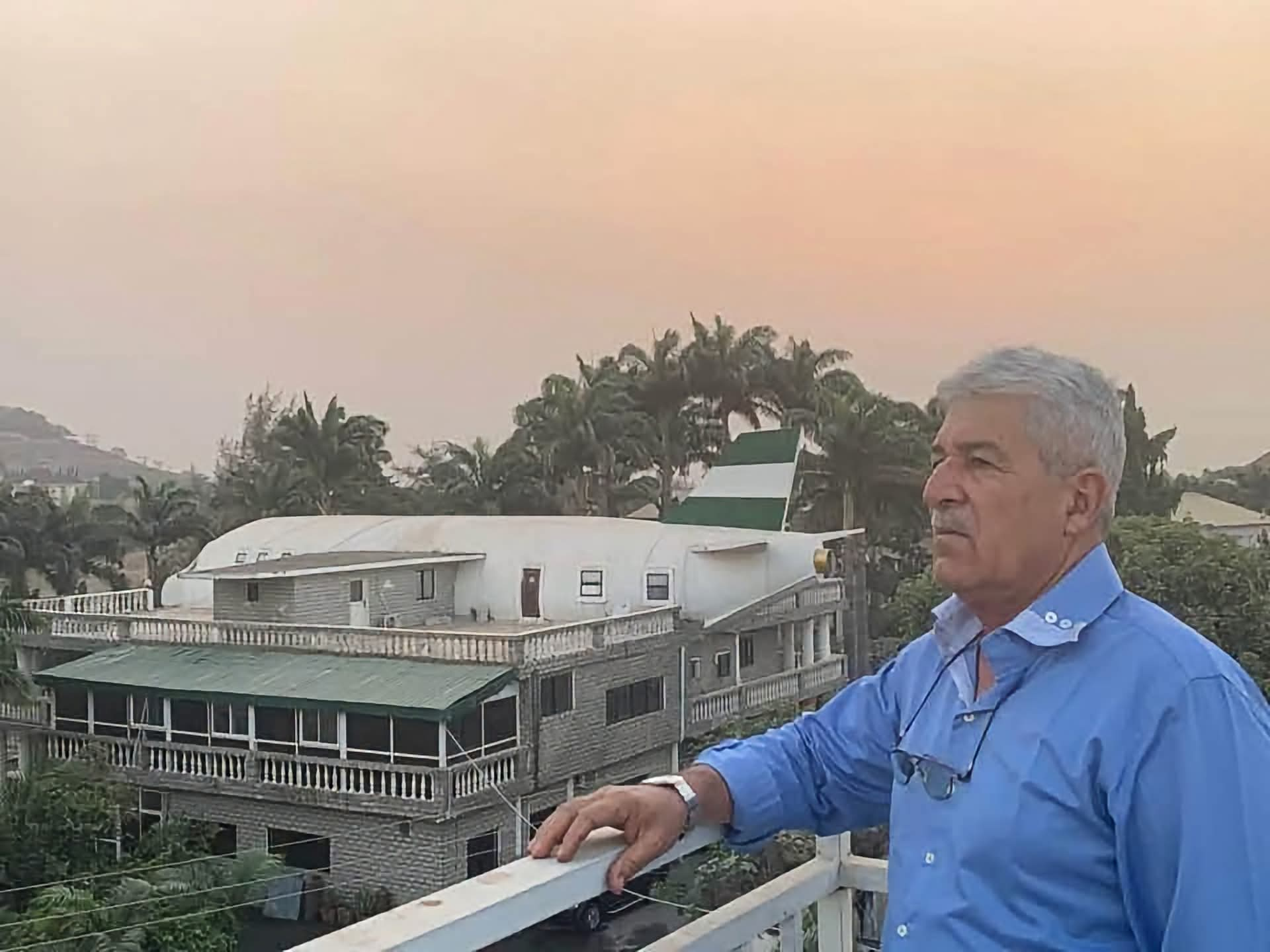
In Asokoro, one of Abuja’s upscale districts, stands an extraordinary residential building designed to resemble an aeroplane. Known as the Aeroplane House, this unusual structure has attracted public attention not only for its aviation-inspired architecture but also for the personal story and family legacy behind its construction. The house was conceived by Jammal Said, […]
In Asokoro, one of Abuja’s upscale districts, stands an extraordinary residential building designed to resemble an aeroplane. Known as the Aeroplane House, this unusual structure has attracted public attention not only for its aviation-inspired architecture but also for the personal story and family legacy behind its construction.
The house was conceived by Jammal Said, a Lebanese-Nigerian construction professional who began the project in 1999. According to an interview with BBC Pidgin, his inspiration came from his wife, Liza, who loves travelling. He wanted to create a home where she would always feel as though she were aboard an aeroplane.
Rather than being a conventional luxury residence, the building incorporates aircraft-inspired features into its design. The main structure resembles an aircraft, with wings extending from the body and a tail completing its distinctive silhouette. Its green-and-white exterior reflects the colours of the Nigerian flag, while the Lebanese cedar emblem on the tail represents his family’s heritage.
The design also extends into the interior, where different sections of the aircraft-inspired structure serve residential and recreational purposes. The wings accommodate bedrooms, while the cockpit area serves as a television and gaming lounge. The property also includes a kitchen, a swimming pool, a private mosque and other living spaces. Additional aircraft-themed structures, including a guesthouse and a control-tower-style guard post, reinforce the aviation concept.
One of the most interesting aspects of the project is the family’s involvement in its construction. Jammal’s son, Mohammed, recalled that he and his siblings helped their father when they were younger, including digging and planting trees around the property. The family has also lived in the house while work continued.
Despite its prominence, the Aeroplane House has not been fully completed. Jammal explained in his BBC Pidgin interview that construction began in 1999 and was still ongoing when he spoke to the broadcaster. The project has therefore developed over many years, making it both a family home and a long-term personal undertaking.
For Jammal, the building represents much more than a romantic gesture. He has described it as a legacy for his wife, his children and Nigeria. He has also expressed his pride in calling Nigeria home, explaining that his family has deep roots in the country.
Today, the Aeroplane House is recognised as one of Abuja’s unusual architectural landmarks and a source of curiosity for people interested in distinctive buildings, engineering and urban exploration. Its story demonstrates how personal inspiration can shape an unconventional architectural project and create a structure that captures public imagination.
From its aircraft-shaped design to the family’s decades-long involvement in its construction, the Aeroplane House offers a different perspective on the homes and landmarks that make Abuja distinctive.
📍 Location: Asokoro District, Abuja, Nigeria.